Something crappy happens to someone you know (lost job, health crisis, death of loved one).
You're freaked out.
You're worried about them.
You want to help.
And in the midst of rushing about and fussing there is the inevitable awkward moment of silence.
You freeze, slightly panicked.
"Crap, what do I do now?"
Since fleeing from the room screaming would be a bit overly dramatic, we fill the silence with a conversation that is more a ritual than bridge between friends.*
We compare tragedies as though they were DVD collections.** Talking about our own bad experience is familiar and feels empathetic. The heart is in the right place, but when you've been on the receiving end of heartbreak or extreme stress, other people's tragedies are not always so interesting.
Death and health crises are rites of passage. Avoiding either is statistically impossible. We tend to think of rites of passage as happy events (weddings, birthdays, the first early morning worship to college's porcelain god). Though happy, they are also fraught with slight anxiety; manifest in magenta butt bows, cakes requiring fire extinguisher and incriminating pictures on the internets. Rites of passage bond us together in general but at the same time are unique and personal.
That general bond is part of the reason why seeing someone pass through the ritual triggers us to share our personal experience. There is a tipping point when empathetic storytelling becomes blather on about yourself. It's like the party guest who wants to wear the birthday girl's sparkly tiara just a bit too long. Feeling definitely get hurt and if there are rhinestones involved, there may be blood.
So at this point, you may be thinking, "Great. If they are not sobbing and my kleenex distribution duties aren't needed, then my only recourse is to sit there and not talk. But I have all this experience from when my great aunt Hildabette got bit by an mutant silverfish and had incurable mysterious reactions (which scientists even wrote a really important paper about--I can probably find it on wikipedia if you'll just give me a few seconds cause it's super interesting) and then died. Her funeral was really sad....I mean...what else can I say? I'm here cause I want to support my friend!"
As a friend you have a role in the crisis ritual--you are the elicitor and listener. Your job is to create the space free from judgment and competitive narratives. You support your friend's rite of passage by asking questions that allow space for reflection. Listening to them speak uninterrupted about the experience--in all its surreal and very real moments--is loving and helpful.
Your best questions are simple, open ended and powerful:
"How has the last hour been for you?"
"Tell me about the changes you've noticed"
"What helps you feel hopeful"
"What makes you afraid"
"Tell me more about that"
Each of our rites of passage--birth, aging, acting silly, bonding with others, illness and death--are never done as pure soliloquies. We have a chorus shaping our narrative, sometimes with comforting noise, sometimes with eye opening silence. Listening is an act of love.
A.O.--I hope I can take my own advice, be a good friend and be there for you.
*Interestingly you could make a solid argument that exactly the same lead up happens on a date before the first move--freak out, concern, a desire to be connected then awkward silence. In this case running away remains a viable option. Or you could just kiss them.
**Arguably there is another set of alternatives to fill the silence--prayer or chanting. Since I don't really believe that prayer will magically fix problems any more than reciting a nursery rhyme might (though it could offer some familiar comfort), I'm not really including it as viable means of filling up the awkward hours. However, it give me a perfect excuse to tell a story about myself so you can see the "let me demonstrate empathy by blathering on about myself" hypothesis in action. When I was in the hospital having the brain scooped out, a very kind Catholic priest wanted to pray with me. My mother was fairly distressed and I figured some prayer would appease her need for something familiar and comforting. I mentioned to the priest that I wasn't really Catholic and was Unitarian, looking for a weasel way out. He countered with the clever "Why don't we say a Unitarian prayer." So I did what UUs have done for ages--I made something up that felt right. I have no idea what I said but it was enough to satisfy the priest and my mother. Even in the midst of a supposed health care crisis, you might find roles reversed and end up being the one one offering comfort.
Thursday, February 28, 2008


Thursday, February 21, 2008
A Guide to Remember
A college age reader who is wrestling with adapting life, epilepsy, migraines, the universe and everything shared the frustrations of losing your memory.
I've written a lot about memory in the last week. I can't seem to hold information at my usual capacity. This is partially due to being overextended (Apartments available! Albany All Stars debut roller derby bout! Work!), but also hardware damage. It is immensely irritating.
Fortunately, my OCD tendencies are kickin' in and battling Team ADD and CRS.* Here are the weapons in my arsenal that may or may not help others with the forgetting. Some are tailored to students based on my experiences from law school when the aura seizures tag teamed with the basic curriculum requirements to create a formidable opponent.
1. Make To Do lists and recopy them every few days. My is usually at 50+ items (because I'm involved in waaaay too many fun projects that contribute to my feelings of insanity). I highlight & star priorities for the day.
2. Audio tape your lectures or important meetings. Most universities allow this for students--especially if there is a learning barrier. You can download the audio files and have a record to help flesh out confusing bits of notes.
3. Have a few people to swap notes with in class. They'll hear things differently and if you give them your notes it won't appear that you're trying to slack off in the pay attention in class department.
4. Carry a small notebook--I write down EVERYTHING. Things to buy, phone numbers, names of new acquaintances and identifiers, tasks to do, promises made, etc.
5. Tell people you might forget and arrange reminders for important meeting or events. Usually they can be automated electronic messages.
6. Inform your support network so they can help you out. For example, if migraine symptoms pop up have 5-10 people who you mass text or email to spark them into action. They can agree to specific roles (i.e. pick up notes or materials from your classes, drive you to the hospital, check on pets, reschedule appointments, etc.). It gets stuff done so you can pick up life more easily post migraine or seizure.
Having had migraines all throughout high school and college and almost monthly seizures in law schools, it also helped me a lot to just inform people about the body rebellions. It made it less scary and offered a practical response over panic. I have become more candid and laissez faire about privacy when it comes to the epilepsy. That might not be within your comfort zone.
-----------------
*Can't Remember Sh*t
Sunday, February 17, 2008
How to Respond to a Seizure
Enough of my blathering about my own head--here's what you can do in response to a seizure.
The Basics:
A comprehensive video from the UK that outlines how to respond to a complex partial seizure (the check-out) and a grand mal seizure (twitching):
(About 7 minutes)
Shorter video on complex partial seizures.
Shorter video on grand mal seizures (aka general tonic clonic).
The Basics:
- Do Something. You can actually help--don't stand their like a deer in the headlights. At least ask if you can help.
- The Signs: Before a seizure, its likely that a person will mentally check-out. They'll seem off as though they were suddenly drunk. For example: I get a sense of deja vu that focuses on smell and will generally ask for something with a strong scent (pepper is a favorite).
- Your Response: Stay Calm, reassure, look for a medical alert bracelet and ask "Do you have seizures?"
- Relocate: Have the person sit down on the ground. The goal here is to avoid a fall or let them wander into danger (like traffic).
- Assume the Position: If they go into a Tonic Clonic seizure (shaking & twitching) do these three things:
- Roll on Side
- Pad & Protect Head
- Time the seizure. Greater than 5 minutes= Call 911.
- DO NOT PUT ANYTHING IN THEIR MOUTH. They won't bite off their tongue. Jaws atwitchin' are not that strong.
- Remind them to breath if they are turning a bit blue.
- Be a Nice Person: Reassure them when they come out of it. They'll probably be really sleepy so get them to a napatorium or a cab so they can get home safely. If possible write down anything you observed before and after the seizure. It really helps with reconstructing time and generally helps them get back to the exciting world of day-to-day living.
A comprehensive video from the UK that outlines how to respond to a complex partial seizure (the check-out) and a grand mal seizure (twitching):
(About 7 minutes)
Shorter video on complex partial seizures.
Shorter video on grand mal seizures (aka general tonic clonic).
Thursday, February 14, 2008
Reverse LifeStreaming
My friend JKD wrote a provocative post about if we can glean any meaning from sharing personal experiences through the internets:
JKD also notes:
It makes me realized what wonderful people surround me. I could fill in a lot of gaps with my compulsive To Do lists, email archives, etc... which insures my ability to function independently. But I'm not really independent--I depend on a network of friends, family, peers and colleagues.
I feel really grateful.
And guilty.
And weak.
Epilepsy is forcing dependence. Depending on other people, especially when I'm mentally out of it and clawing for coherence, means acknowledging that I can't solve a problem myself.
Now rationally, I know that great solutions come through collaboration and are frequently much richer than what we can concoct alone. Emotionally, admitting that I do not have the capacity to solve a problem is extremely distressing. I HATE complaining or worse, appearing to be some weak, fragile, fainting flower of womanhood.
However, there is maturity in acknowledging I can't solve problems, don't have all the answers and will have to ask someone to focus their time and attention on my needs. If Lifestreaming illustrates anything, it is that regardless how much we prize our individuality and unique perspectives within our lives, we crave connections. Asking another to help you figure out a problem creates vulnerability as we describe our ignorance. Trusting others to not take advantage of a vulnerability is a risk and opportunity to build interdependence.
It is not a great revelation that building trust and interdependence needs mutual vulnerability. Why is taken on the extreme of the young, fainting, helpless belle so unappealing? Because she exploits the best instincts of her heroic rescuer.
Helping someone is a risk--it pulls us out of the familiar, tests our intellectual and emotional capacity and may have terrible outcomes (resentment, betrayal, misrepresentation or outright failure). Pulling someone from a burning car or repositioning a seizing epileptic means you could be holding a person as they die. Even offering advice or resources to help someone access new possibilities means that good intentions may go unappreciated, resented or radically change the relationship.
When someone embraces that risk and offers help with open arms, exploiting that instinct is a vile, selfish and almost unforgivable act. It severs the connections which weave our lives together. Those connections can hurt, but they also give our lives meaning and depth. I wouldn't be able to bounce back into life so quickly if I couldn't ask other people where my life was when the brain shut off. I'm grateful for everyone who take on the risk when I'm helpless and confused. It's nice to not have to go at it alone.
Lifestreaming, if it’s understood as an attempt to catalog every single thing that happens in a day and put it in some kind of infinitely-faceted context, is no more interesting than reading someone’s diary of every single thing they do in a day. Perhaps good for a lark - and a giving of thanks that you’re not yourself trapped by such a compulsion - but nothing of particular merit or worthy of striving for as a goal.We're all voyeurs, perhaps to reassure ourselves that our experiences are shared and normal even though they are uniquely ours. The interwub eases lifestreaming's hallmark sharing (and oversharing) process by at relieving the restraints of distance, time and language.
JKD also notes:
You wouldn’t want to post the entirety of your walk around the block - with video, audio, GPS coordinates, barometric pressure, etc. - as a lifestream entry. But maybe there was a moment when you looked up and to the left, and the sun glinted just so through the tops of the trees tipped with last night’s frost, and a hawk soared past. Maybe that would be worth both remembering and transmitting to the world (or your little slice of the Intarwub), with or without fuller context.Since the twitchyness yesterday, I've spent a bit of time in a reverse lifestream process. Today and yesterday I asked friends to recap conversations, on-going projects and what I've promised to accomplish. Interestingly there are quite of few of them who seem to believe that I'm going to send them oodles of cash. I may not be the only one who is delusional. :)
It makes me realized what wonderful people surround me. I could fill in a lot of gaps with my compulsive To Do lists, email archives, etc... which insures my ability to function independently. But I'm not really independent--I depend on a network of friends, family, peers and colleagues.
I feel really grateful.
And guilty.
And weak.
Epilepsy is forcing dependence. Depending on other people, especially when I'm mentally out of it and clawing for coherence, means acknowledging that I can't solve a problem myself.
Now rationally, I know that great solutions come through collaboration and are frequently much richer than what we can concoct alone. Emotionally, admitting that I do not have the capacity to solve a problem is extremely distressing. I HATE complaining or worse, appearing to be some weak, fragile, fainting flower of womanhood.
However, there is maturity in acknowledging I can't solve problems, don't have all the answers and will have to ask someone to focus their time and attention on my needs. If Lifestreaming illustrates anything, it is that regardless how much we prize our individuality and unique perspectives within our lives, we crave connections. Asking another to help you figure out a problem creates vulnerability as we describe our ignorance. Trusting others to not take advantage of a vulnerability is a risk and opportunity to build interdependence.
It is not a great revelation that building trust and interdependence needs mutual vulnerability. Why is taken on the extreme of the young, fainting, helpless belle so unappealing? Because she exploits the best instincts of her heroic rescuer.
Helping someone is a risk--it pulls us out of the familiar, tests our intellectual and emotional capacity and may have terrible outcomes (resentment, betrayal, misrepresentation or outright failure). Pulling someone from a burning car or repositioning a seizing epileptic means you could be holding a person as they die. Even offering advice or resources to help someone access new possibilities means that good intentions may go unappreciated, resented or radically change the relationship.
When someone embraces that risk and offers help with open arms, exploiting that instinct is a vile, selfish and almost unforgivable act. It severs the connections which weave our lives together. Those connections can hurt, but they also give our lives meaning and depth. I wouldn't be able to bounce back into life so quickly if I couldn't ask other people where my life was when the brain shut off. I'm grateful for everyone who take on the risk when I'm helpless and confused. It's nice to not have to go at it alone.
Slight Brain Malfunction & Valentine's Day Love
My coworkers are some of the greatest people on the planet. I wanted to thank them publicly for taking care of me yesterday as I had a series of aura seizures.
Today I'm a little fuzzy and strangely aware of just how much I have on my plate.
So here's what I've learned in the last twenty-four hours:
Our time in this life is short and I treasure these reminders that living joyfully and with gratitude leaves a soft mark on those with whom I'm privileged to share each day.
Thanks.
Today I'm a little fuzzy and strangely aware of just how much I have on my plate.
So here's what I've learned in the last twenty-four hours:
- I HATE admitting to myself that I have epilepsy. I hate it. I do admit it because I'm not irrational and realize that I can't actually deny it. But I hate having it. I don't have control over my own body. It will defy me, act naughty and I can't do a damn thing (except take my medications and generally be nice to myself).
- Losing chunks of time from memory loss is much less intimidating when friends help with reconstruction. Sometimes I can figure out things myself but insights from friends speed things along. For example, I need bloodwork done this week and couldn't remember if I had skulked over to the medical center. A lack of holes in my arms clued me that that remains a fun activity for the week. However, response to a mass email helped a bunch--though the majority of my friends seemed convinced that I was about to write them rather large checks. Those babies are in the...ahem...mail. Good luck getting them to clear.
- The memory does come back. For that, I'm eternally grateful. My greatest fear is losing it altogether. Since I'm involved in a ridiculous number of projects, my brain is stimulated. I started the morning working through spreadsheets for a rental property side business. The stimulus and imperative to get stuff done eliminates the excuses that lurk along with my lazy tendencies.
- Friends--I couldn't do it without you. Friends includes family and coworkers. You help me back into rhythm which straightens up the jumbled mess in the brain. Thank you.
- Charlotte & Lisa: Thanks for dealing with the immediate concerns and remaining calm.
- June & Mike: Thanks for my pretty new bracelet--the most useful piece of jewelry I own and squirrel references are a good clue to the natural state of wackiness.
- AASRD: Thanks for keeping me on track. And on the track.
- Alan: The detailed timeline was a beautiful grounding.
- MO: Getting out of the house last night was essential and not just for caloric intake.
Our time in this life is short and I treasure these reminders that living joyfully and with gratitude leaves a soft mark on those with whom I'm privileged to share each day.
Thanks.
Tuesday, February 12, 2008
Visualizing Epilepsy: Treatment Options
How to cure it all as inspired by the fine art of Natalie Dee:
An accurate illustration of the state of things:
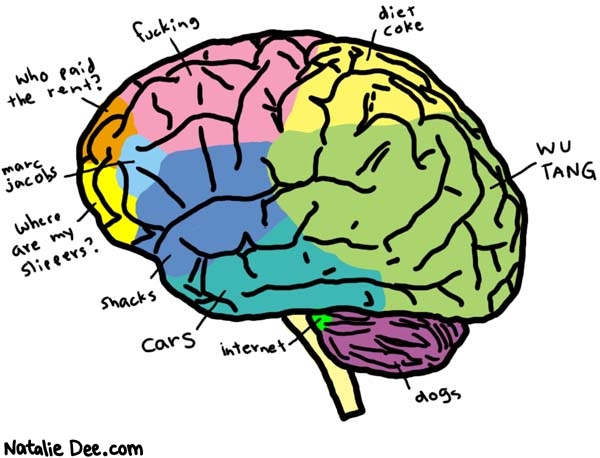
nataliedee.com
DIY holds down those silly hospital bills!

nataliedee.com
What if I say pleeeeeease?!?

nataliedee.com
Squirrels cure everything:
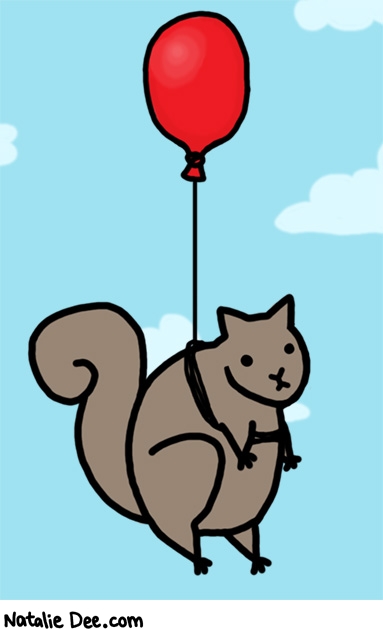
nataliedee.com
Am I procrastinating or off the meds?
An accurate illustration of the state of things:
nataliedee.com
DIY holds down those silly hospital bills!
nataliedee.com
What if I say pleeeeeease?!?
nataliedee.com
Squirrels cure everything:
nataliedee.com
Am I procrastinating or off the meds?
Visualizing Epilepsy: Stamps
How do you educate and raise awareness about epilepsy? Tiny pieces of art that move ideas around, aka stamps:


From BoingBoing:
Link


From BoingBoing:
The University of Washington's Neuroscience For Kids site has a fantastic gallery of postage stamps from around the world that feature neuroscience-related themes.
Link
Thursday, February 7, 2008
Fear & Focus
My brother Jacob just finished his first week of Army basic training. Also a law grad, he's quick with the witty banter, kind and thoughtful. I would prefer this type of brain not be splattered across the ground in Iraq, Iran, Afghanistan, North Korea or any other country on the invade-able list. The same for my cousin William, currently in Iraq. Well, I feel this way about every brain out there in the world.
Though we graduated at the same time, Jacob struggled with his next career step for almost two years. This struggle is normal--I haven't met a single person who hasn't agonized over what to do with their life. It's worse if you have talent and intelligence bas there are more options to weigh. With a wealth of opportunities, sometimes we choose to not choose.
Choosing not to choose is a great way to stay in the warm, familiar, slightly dissatisfying mind frame that let's us fret about the future and avoid risks. I was a master. After college I spent years flitting from interest to interest and project to project. Politics! Historic preservation! Writing! Organizing! On and on--all fascinating ways of frittering away time. I was toying with grad school, an MBA, law school but afraid to leave my boyfriend, my friends, my comfy world. In my heart I was unhappy and desperately trying to ignore my inner voice screaming at me to live in a way that was consistent with my deepest desires and hopes.
When I took a tentative step towards those desires and hopes, I tried to weasel out of confronting my fear head-on. I'm sneaky enough that when giving law school a shot, I worked to fail. Studying for the LSATS--no, I'd rather sit around and pontificate than work. How about being overly picky about applications for schools because I have to see the boyfriend on weekends or he'll be so sad without me. Ooo....LSATS are tomorrow, let's go out drinking tonight (not a fun test hungover by the way). Okay, I got in....well let's cultivate the attitude that it will still suck cause law students are all assholes (except me of course..oh and whoever I'll be friends with...yeah).
I got into Marquette and a program that offered the opportunity to study dispute resolution--a field that mirrored some of my deepest concerns for building systems built on fairness and self-determination. And with my fear-based mindset after the first hellish semester, I would have bailed.
Fortunately, two weeks before starting law school, I had my first seizure and brain surgery.
I faced death with surprisingly little anxiety. The seizure was sort of like a mini-death. Who you are is instantly gone. There's no memory and no pain. Death is not really a big deal (except for everyone who keeps living obviously).
What became my focus was the fear of living. If the surgery wiped me away or trapped me inside myself, life would have been very very long and frustrating. If the surgery merely impeded getting what's inside out, I decided I could work with that. In the hospital something shifted. When I left, my warm comfortable angst, indecision and grating dissatisfaction were cut away with chunk of gray matter.
The experience left me a wee bit blind, epileptic and unafraid.
That focus afforded an opportunity for me to walk away from my fear about the future of my career. I woke up, realized death will show up unannounced, and thought, "why not make a decision, commit to it and see how it plays out."
Here's another example if the 'scoop out my brains' option isn't as applicable to your life: making a big choice in life (career, relationships, kids, etc.) is like buying a car. We have this huge range of options parked in the lot in front of us. A rainbow of colors, types, prices and features. There may other dealerships with our ideal model that we might never even meet. But what is car (or a career) but a vehicle that allows us to explore, have adventures, meet people and get stuff done. We need to consider to what we want to accomplish with this vehicle, but regardless of the final choice, it's always us in the drivers seat. We are responsible for how we use the opportunity that a vehicle affords.
I walked into the first day of law school, shaved head and rockin' my scar, having made a commitment to a path. I was uncertain where it would lead but free from being smothered by second guessing. In choosing, I closed some open doors to different futures. But I owned that choice: the responsibility for it when times were tough was mine, the success was mine, the risks were mine.
But my experience in finding focus pales in comparison to my brother. He didn't have a big, scary crisis to help pull his life into focus. I had it easy. He found focus in the midst of humdrum daily living. Jacob overcame his fear and uncertainty about the future and took the drivers seat to a new adventure. He set himself free.
Friday, February 1, 2008
Neuro-Talk Sucks You In
Brains on Purpose illustrates a trend in popular science writing--mention the interaction with brain chemistry or structure and whatever you're writing increases in legitimacy and clout.
It also popularizes topics that might slip past public notice. Since I work in dispute resolution, I'm constantly hearing the mournful cry of "Why don't people use dispute resolution services more?" As in why don't mediators/facilitators/arbitrators building their practice get more business.
The blog's review of the Harvard Business Review article Investigative Negotiation by Deepak Malhotra and Max H. Bazerman highlights the strengths of questioning techniques that are the backbone of interest-based negotiation. Bazerman knows what he's talking about--he's been writing and teaching on the psychology of negotiation and judgment for years at Harvard Business School.
The articles main points repackage interest-based negotiation:
Essentially, to negotiate well ask questions to uncover information that can lead opportunities for a deal. This is a nice catch phrase but within the field it is not necessary new content. Well researched and helpful certainly, but not new.
But watch how Brains on Purpose links our fascination with brains with an established theory:
Too much reliance on one form of insight parallels the anxiety in the dispute resolution field that only certain professional roles (i.e. lawyers) are truly qualified to do the work. The interdisciplinary nature of the field is our challenge to a unified identity but also why what we do will survive. Being able to integrate diverse backgrounds allows adaptation. Neuroscience's role in understanding conflict resolution draws the interest of new constituencies but we should keep our ears tuned to chorus of research areas to enhance our understanding.
It also popularizes topics that might slip past public notice. Since I work in dispute resolution, I'm constantly hearing the mournful cry of "Why don't people use dispute resolution services more?" As in why don't mediators/facilitators/arbitrators building their practice get more business.
The blog's review of the Harvard Business Review article Investigative Negotiation by Deepak Malhotra and Max H. Bazerman highlights the strengths of questioning techniques that are the backbone of interest-based negotiation. Bazerman knows what he's talking about--he's been writing and teaching on the psychology of negotiation and judgment for years at Harvard Business School.
The articles main points repackage interest-based negotiation:
- Ask why the other side wants what it wants. (Note: I discourage the use of "why" questions and use other inquiries to uncover the reasons.)
- Mitigate the other party’s constraints.
- Interpret demands as opportunities.
- Create common ground with adversaries.
- Investigate even if the deal seems lost.
Essentially, to negotiate well ask questions to uncover information that can lead opportunities for a deal. This is a nice catch phrase but within the field it is not necessary new content. Well researched and helpful certainly, but not new.
But watch how Brains on Purpose links our fascination with brains with an established theory:
The brain likes to be creatively engaged. Creative and thoughtful engagement lessens stress and fear, and therefore can lead to better ideas. An activity important to conflict resolution, and an activity of creative engagement, is questioning. Our brains like to formulate and answer questions.BonP's focus is the interaction between conflict resolution and neuroscience. Authors Stephanie West Allen and Jeffrey Schwartz write very thoughtful posts with good sourcing. They've tapped public interest in the mind and recognize the risks of the fascination of "neuro-talk."The brain likes to be a detective and the detective work helps in negotiation. The authors of the Harvard Business Review article "Investigative Negotiation" say, "The best way to get what you’re after in a negotiation—sometimes the only way—is to approach the situation the way a detective approaches a crime scene." The brain gives that statement a high five.
Neuro-talk is what we call use of the science to create misleading brain myths or make ungrounded leaps from the research to unjustifiable conclusions.How much of a link is there between the hardware (brain) and the software (what we do with our brain) when it comes to negotiation? Psychology is drawing more on hard science data certainly, but what's at risk by an overemphasis on neurology? What other research areas are overlooked when we become saturated in one aspect of a multifaceted discipline?
Too much reliance on one form of insight parallels the anxiety in the dispute resolution field that only certain professional roles (i.e. lawyers) are truly qualified to do the work. The interdisciplinary nature of the field is our challenge to a unified identity but also why what we do will survive. Being able to integrate diverse backgrounds allows adaptation. Neuroscience's role in understanding conflict resolution draws the interest of new constituencies but we should keep our ears tuned to chorus of research areas to enhance our understanding.
Subscribe to:
Posts (Atom)
