Thursday, January 31, 2008

Why Romance God When Science Puts Out?


Or why I'm not turning to Jesus, Budda, Mohammad or L. Ron Hubbard as a panacea for my problems.

Before you try to convert me to whatever system of believing in the invisible pink unicorn you currently subscribe to, let me get this out there.


I'm Unitarian Universalist, which means I can practice what I actually believe.* Presently, I'm pretty much an atheist. Atheist does not equal kicking kittens and worshiping Satan. I'm ethical, like kittens and Satan doesn't exist any more than God.

But boy-o-boy can I believe in human ingenuity.

As a species we're pretty good at screwing things up: global warming, genocide, paper that could be used as an edge weapon in hand-to-hand office combat. But fortunately our brains also create great systems to solve our screw-ups.

Enter science with its adorable helper the scientific method. Ask a question, make a guess, test the guess, revise if necessary. Oh...yeah.. your friends (and enemies) will be checking your work. If you faked it, you'll be called on it. It's accountable and it gets results.

For example, the epilepsy blogosphere seems pretty psyched about Canadian discovery that memory can be significantly improved.

BoingBoing offers a nice summary and a link to the paper abstract.
A morbidly obese man who was undergoing treatment with deep brain electrical stimulation experienced a surprising boost in his memory. Deep brain stimulation devices are comparable to a "pacemaker" for the brain and are used to treat Parkinson's disease, depression, and other disorders. When the physicians at the Toronto Western Hospital first stimulated the electrodes in the patient's brain, he experienced deja vu and was then overwhelmed with incredibly vivid memories from decades before. He subsequently performed much better on memory tests when the stimulator was switched on.
Jonah Lehrer of the Frontal Cortex offered this reflection:
Think about how surreal this is: the man thought he had forgotten these memories. He thought they had faded from his brain. And yet, the memories were still there, persisting as an immutable network of interconnected neurons. The question, of course, is how this persistence occurs. After all, the cells of the brain, like all of our cells, are in constant flux. The average half-life of a brain protein is only 14 days. Our hippocampal neurons die, and are reborn, the mind in a constant state of reincarnation.
Link

Cool, huh? And if it turns out to be a fluke or made-up bullshit we'll find out. That's what science does. Unlike "intelligent" design, which demands that you believe the premise to be true and then ram the outcome in the faith shaped mold, science does not get all hot and bothered when the end result doesn't equal what was expected. Science gets stronger the more questions you ask. Religion gets the firewood, gasoline and rope when you ask the wrong questions.

Maybe I'm naive to trust my species to solve its problems. But I've been testing out my theory for 29 years. Yup I've had to tweak it from time to time (at age 14 year old my co-researchers didn't seem too keen on solving problems of the species unrelated to acne and lip gloss) but overall we seem to work out the kinks.

Parallel research with God delivering on the problem solving...well not so much with the direct evidence. Prayer seems useful the way talking to yourself helps you remember what's on the grocery list you left at home (again).

We have so much to discover about this life and the bodies we live in. Our brains are awe inspiring. We're inspiring as human. We have one life to live in a meaningful way.

I understand the attraction of following a religion that offer you a second chance at living. It's an appealing option when faced with reality: living this short life with meaning is hard work and requires us to give a damn. There are no books with all the answers that you can memorize**, all-knowing sky fathers or people who'll solve your problems with a touch***.

Believe what you want. It's your brain that lets you do it.

*Terms are subject to change without notice.
**and quote like an annoying English major who read MacBeth for the zillionth time.
***of the pen to your checkbook. Make it out to Holy "Cow I Can't Believe You Bought It" Ministries. No it's not tax deductible.

Friday, January 25, 2008

Brains are the New Black

Yes. I know that "blank is the new blank" as in "neon pink is the new black" or "high-waisted shorts are the new lederhosen" is turn-of-phrase that we're supposed to retire in 2008 to hang out with the hip kids.

If I had my druthers, this would be trotted down all the runways of Paris, NYC & Milan as the new "must have" accessory. I'll take three (in black, taupe & navy) just in case.

It looks alone weren't enough:

The helmet is the creation of Dr Gordon Dougal, a director of Virulite, a medical research company based in County Durham.

It follows a study at the University of Sunderland which found infra-red light can reverse memory loss in mice.

Dr Dougal claims that only ten minutes under the hat a day is enough to have an effect.

"Currently all you can do with dementia is to slow down the rate of decay - this new process will not only stop that rate of decay but partially reverse it," he said.

Low level infra-red red is thought to stimulate the growth of cells of all types of tissue and encourage their repair. It is able to penetrate the skin and even get through the skull.

Remember...beauty fades, but dumb is forever. A fully functional brain is always attractive.

Thursday, January 24, 2008

Memory, Identity & Reputation

When I was about six years old, I went with my grandmother to a nursing home. We were visiting my great-grandmother, who was in the last years of her life and suffered from Alzheimer's Disease. There were pictures of her holding me as a baby from a few years earlier, a hint of a smile on her face.

She was my oldest living relative. I was ready to crawl into her lap and get petted and cuddled. As I reached out for that first touch, my grandmother snatched my hand back.

"She bites."

I was shocked and confused. Kids (bad kids) bite. Adults don't. But it was my introduction to understanding what it means to lose your memory. She didn't know the people who cared for her. She couldn't remember the work she did throughout her life. Family, friends, coworkers, pets, travel, all the textures of life--were gone. She was alive but who she was gone.

My November seizure left holes in my memory. There are several days that are deeply fogged. Reconstructing them is like a terrible student film with awkward cut shots to confusing and irrelevant scenes.

The next few weeks were better but it was though I was always drunk. It didn't stop me from closing on a major real estate project, but not everything was there.

Nevertheless, I went back to work. I love my job. Shying away from reengaging with the day-to-day struggles of meaningful work was option I never allowed myself.

Losing part of your memory poses a real risk to your career. One mistake, one oversight, one key fact forgotten, can destroy a career and professional reputation built over years of work and education.

A striking example is Kurt Eichenwald, a former star investigative journalist at the New York Times. Eichenwald's work was key unearthing online child pornography rings. He hid his epilepsy throughout his career, afraid that editors concerns about its impact on his memory would trump his ability to do his job. National Public Radio described his reasoning and the ultimate fallout.
"Eichenwald's famed meticulous reporting methods on corporate intrigue masked his deeply unreliable memory for names, facts and events. Medical authorities such as Dr. Gregory Bergey, director of the Johns Hopkins Epilepsy Center, confirm such memory loss can indeed result from those repeated seizures.

"There are reporters who are stupid. There are reporters who are lazy. There are reporters who are drunk," Eichenwald says. "I'm none of those things. And I didn't want to be judged on my challenges. I wanted to be judged on my work."

He never wanted to acknowledge his memory loss to his editors because, he says, he believed they wouldn't let him be a reporter. "
Eichenwald, an investigative journalist who broke a significant story on online child pornography, came under criticism when he forgot to reveal that he had financially supported legal and mental health services for his source, who was both a victim and perpetrator of child porn. Eichenwald's position is that he simply forgot to tell his editors at the Times.
"I believed that I had enough of a reputation and enough of a track record that, when I say to other journalists, 'I don't remember,' that they could simply accept that — or prove me wrong," Eichenwald says. "But instead, it just became fodder for more attacks — and for people saying, suggesting, that I was obviously hiding something, because I was saying I forgot."
People are kind and cruel. They empathize with a health concern but fear it. Consciously or unconsciously it influence their judgment of you ability to produce. It eases the ability to prejudge a person, not as significantly as race or class certainly, but it still applies as a factor.

It is more difficult to do work with a condition that affects memory. It takes more time, requires developing systems to capture and retain information. I can't multitask well. I lose track of details if they are not written down. I have to ask colleagues and peers for their patience as I struggle to retrieve a conversation or fact from the dark hole of my cranium.

Its humiliating.
Often I'm pissed at myself for not being able to do what has been easy throughout my life.
And though I'm comfortable telling people about my epilepsy and that it can interrupt my memory, I fear judgment as Eichenwald did.

My fear of forgetting is constant. I hope it will be something small and forgivable. But there is a risk that it will end my career or cut me off from the people love.

Someday I could forget who I am and bite the open hand of my trusting great granddaughter.

Sunday, January 20, 2008

Common & Uncommon Knowledge

Throughout this week, I've mentioned my diagnosis to several dispute resolution colleagues and noted a commonality in their reactions. Almost to a person, they know someone who lives with epilepsy. On average, I'm probably one of the younger people working in the field. It is clear that as we gather more life experience, we learn of life's little curve balls through our network of contacts.

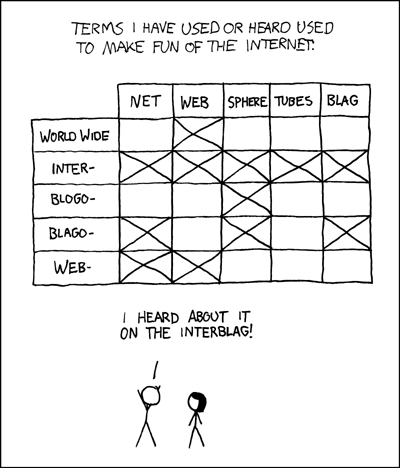
And as a Gen-X/Gen-Yer, my network is intertwined with the web*. Now, I'm not going to bore you with the standard blather about how the interwub* is bringing the whole world together to either sing Kumbaya/scam people out of money/get us laid. The intertubes are a great wealth of information and a wonderful tool to connect us together (for better or worse).

So why didn't I, a moderately intelligent person who spends a lot of time online, use the internets* and figure out that I had epilepsy? You tell me:

  • You don't know how to work the internets
  • Ha! You were too distracted by sites dedicated to squirrels, humorous cats or snarkiness
  • You never went past the first page of the Google search
  • You didn't really want to know what was wrong
  • You were diligently using the interwub for work research or flirting

I think I fell prey to my generation's research trap: the world wide web* allows us access to everything, but it doesn't mean it will come to something.

Confused? Yeah, I bet. Imagine walking into an unstaffed library where books are placed on the shelf at random. No cozy Dewey Decimal System and no uber Librarian of Congress to lead you in the right direction. You could however shout out a keyword and the books that were even tangentially related would fall off the shelves. Certain words might drop a few tomes, others would deafen and bury you in a nerd's perfect death. You'd have access to the raw info but be uncertain if it would answer your question.

There's two problems here about relying on the information superhighway* as the sole means of answering a question.
  1. You have to ask the right questions.
  2. You have to make sense of the answers.
My problem was that I was too ignorant to ask the right questions. Mastering a new subject means asking very basic, "dumb" questions. I'm smart and cocky. I didn't apply my dispute resolution skills--lay out what you know (months of weird moments: smell deja vu, fluttering heart, anxiety tummy, barfing & sweating) and ask some open ended questions (what do these symptoms tell you?).

I was asking the internets about panic attacks. There was good information aplenty on that topic. But I probably hurt myself more than helped--I assumed that I was asking the right question because that was my first hunch. Boy was a wealth of information to back up my assumption.

But I never questioned if my hunch was not to the level of Nancy Drew's hunches. Unlike hers which drove a fairly formulaic mystery plot, my hunch was simply wrong. The bigger danger was that once I had my paws on some website information, I assumed I had solved the problem and stopped questioning.

The neurologist could ask the right questions and make sense of my symptoms because there was a point in his training where he could ask very basic, "dumb" questions. Mastering those questions let him ask smarter and more relevant questions; cutting through the information piles until he had the right word to describe the problem. His training let him make sense of the gazillion potential answers and find the right one.

I'm lucky that I had a seizure at work--not on the road, not in a pool, not alone and not with people who would intentionally or unintentionally hurt me. But if I had and the situation was bad, I would have NO ONE to blame but myself. I assumed that I could solve the problem myself with the minimal effort an internet search takes. Asking for help, turning to an expert, being just a bit humble and dependent would have addressed this problem years earlier. I was afraid to be ignorant, to be weak, to ask for help. It was one of the stupidest decisions of my life. And one that I'll probably repeat in various guises.

But learn from my idiotic behavior--even with the internet, libraries and well-meaning friends who can offer information and perspectives, it is okay to ask an expert. It's more than okay, it is the smart first step in researching a new area that you want to master. It will give you a basis on which you can build and test some theories. You'll ask better questions, get better information and better results. I love the speed of communication and access to information (and cat pictures) that the internet affords us. But I learned the hard way that lots of data does not necessarily lead you to a solid outcome when your premise is faulty.

*Afterall, there isn't a cohesive name for the inter-world-wide-blogo-net-sphere-tube-web, so maybe we should have some healthy skepticism for its ability to answer all our questions within the top ten hit.

Wednesday, January 16, 2008

Goodbye to Booze

One of the most immediate changes has been no more booze because of potential medication interactions. No* beers, wine, scotch, brandy, red headed sluts, mimosas, manhattans, margaritas, or the always regrettable Jaeger shot.

I'll miss beer the most.

For some reason it is frowned upon to admit you like to drink, as though acknowledging it makes you a budding alcoholic. Well, I like to drink. Beer, wine & cocktails go hand-in-hand with celebration, intimate conversations and shenanigans. Yes, it can lead to regrettable actions and incriminating photos. On the whole though, drinking for me has been associated with happy moments with family and friends.

It will be bittersweet to lose this social lubricant. Goodbye to beer snobbery! Farewell to the retro-kitsch of obscure cocktails! Cheers to the risk of being found dead surrounded by empty wine bottles with my body half-eaten by my cats.**

As a native Wisconsinite, I'm going to be relying on other cheeseheads to maintain our notable alcohol consumption statistics. However, in all adversity there is opportunity (and not just to use tired metaphors).

I'll drive your drunk ass around. Oh wait. Not for awhile anyway.
I'll take incriminating pictures of your antics. Hello supplemental income!
I'll pull the cork out when your hand/eye/corkscrew coordination fails.
I'll dance right next to you confounding observes guessing who is drunkerer. It'll be you but they won't be able to tell.

Part of my fear of becoming a non-drinker is that I'll become a preachy teetotaler. Or worse. Natalie Dee


Fortunately I have good non-drinking role models (hats off to MP & MO) who cause more fun then the legal limit. And being a non-drinker doesn't mean that you can hang out in bars with friends and potential flirtations.

So my new drink of choice is ginger ale with a shot of bitters. I need your suggestions for clever names as my warped brain is leaning toward "Sass in a Glass," which is just wrong. Of course science could provide alternatives.


Thanks be that the docs haven't taken away my caffeine. It would not be pretty.

*No for any given quantity of No which may vary as circumstances require.
** Maybe this is not so bad.